This is the list I wish someone had handed me when I started reading Antifragile. The book is five hundred pages of brilliance and bombast mixed together, and mining the gold takes patience — so I did the mining for you. What follows are the twenty-five lessons that stuck, the ones I actually use, each one explained simply and followed by an example from real life.
A word before we start, in the spirit of honesty I keep with you on this site: these are the lessons as I understand and apply them, filtered through my own judgment. Taleb says plenty of things I don't adopt, and I have written elsewhere about taking the concepts while leaving the controversies. This list is the keeper shelf. It is also, I will admit, the intellectual backbone of the book I am writing for newcomers — these ideas appear throughout it, translated into a step-by-step system. Let's go.
The core philosophy
1. Sort everything into three categories. Fragile breaks under stress, robust withstands it, antifragile grows from it. A wine glass, a boulder, and a muscle are your three models. Before any big decision — a job, a loan, an investment — ask which category the result lands in. Just asking the question changes what you choose.
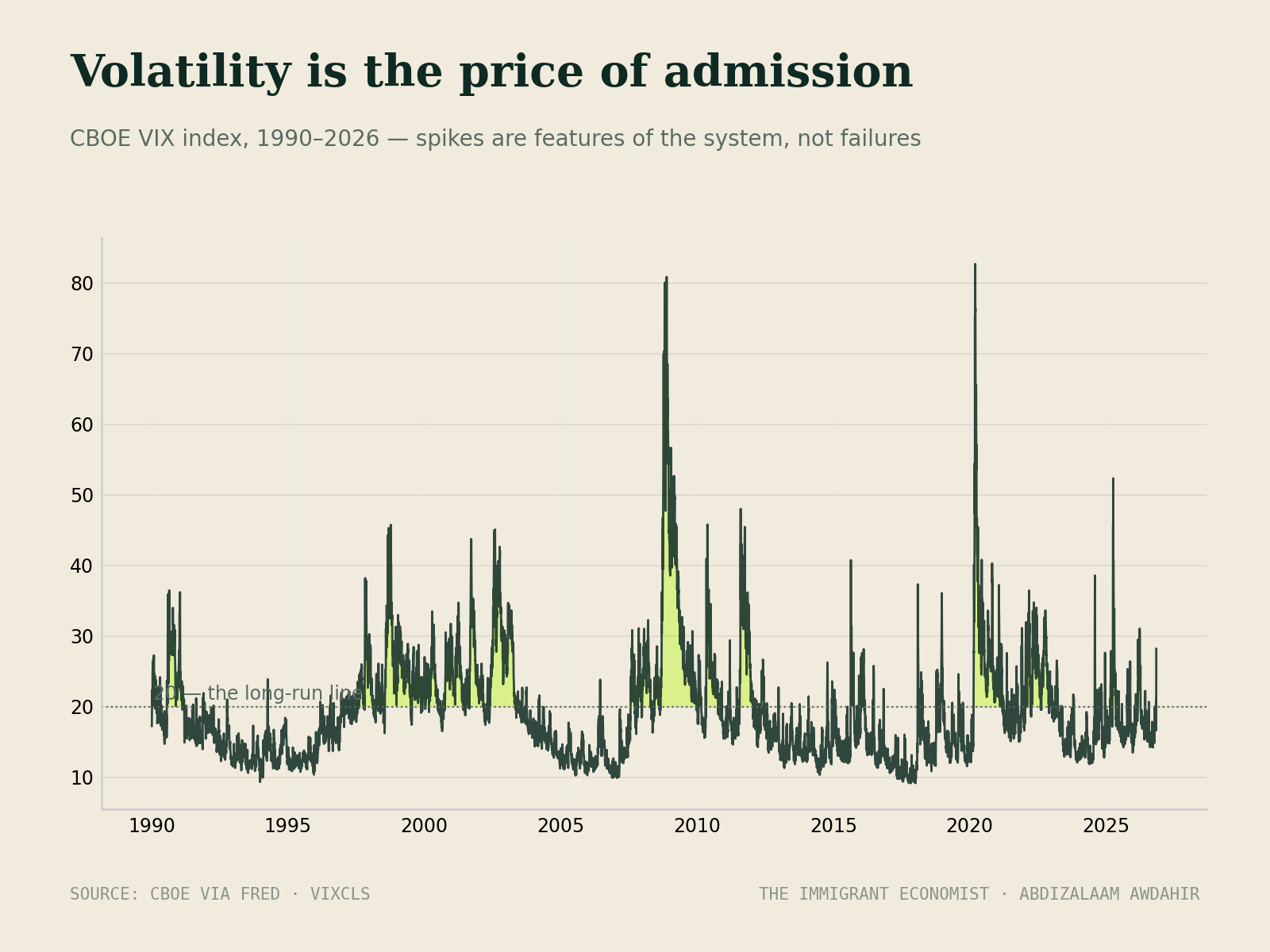
2. Seek small doses of volatility on purpose. Systems that never face small stresses become vulnerable to the big one. This is why vaccines work — a weakened dose trains the immune system for the real thing. In life: take the stretch assignment, learn the intimidating skill, have the awkward conversation. Small, frequent stress is training, not danger.
3. Don't touristify your life. Taleb's word 'touristification' means removing all randomness and spontaneity — over-scheduling, over-planning, over-protecting. The parent who schedules every minute of a child's day raises an adult who cannot handle a boring Tuesday or an unexpected problem. Leave slack in your calendar, your budget, and your plans. Slack is not waste; it is shock absorption.
4. Respect what has survived — the Lindy effect. A book that has been read for two thousand years will probably be read for a hundred more; a bestseller from last year will probably be forgotten by next year. Gold has stored value for five thousand years; the newest financial product has survived nothing. When choosing what to learn, what to trust, and what to own, age is evidence.
5. Keep your identity small. If you define yourself by a fixed position — a party, a tribe, a single profession — then every challenge to it feels like an attack on you, and you become intellectually fragile. Define yourself instead as someone who updates. You can change your mind without losing yourself. In a fast-changing economy, the flexible identity is not just happier — it is more employable.
Money and investing
6. Build your finances as a barbell. Put the great majority of your money in truly safe places — an emergency fund in a riba-free account, boring diversified halal index funds on automatic contributions — and a small slice, five or ten percent, in openly speculative bets with big upside. Skip the mushy middle entirely. The safe end makes you unkillable; the risky end gives you a lottery ticket you can actually afford.
7. Prefer asymmetry everywhere. Look for setups where your downside is small and capped and your upside is large and open. A low-cost certification with a lifetime of earning power is asymmetry. A side project that costs weekends but could become a business is asymmetry. A leveraged investment that can wipe you out is the opposite — reverse asymmetry — and it is how families get destroyed.
8. Never accept blow-up risk. No matter how good the returns look, never hold a position that can go to zero and take you with it. Even if it works ninety-nine times, the hundredth time ends the game — and Taleb's deepest rule is that you must never leave the game. Before investing in anything, ask: if this went to zero tomorrow, does my life change? If yes, you are too exposed.
9. Treat debt as fragility. Debt removes your option to walk away — payments are due in good times and bad, which means a leveraged household must make desperate decisions exactly when conditions are worst. A family with no debt can survive a job loss with dignity and time. That breathing room is worth more than almost anything the borrowed money bought.
10. Don't predict Black Swans — prepare for them. Nobody predicted the pandemic, the 2008 crash, or the next crisis either, and nobody will. Prediction is a trap; preparation is a strategy. You prepare with the barbell: reserves on the safe end, optionality in your skills, and no exposure that can ruin you. The next shock is coming. You do not need to know its name.
11. Practice Stoic downside protection. The Stoics rehearsed worst-case scenarios — premeditatio malorum — not to be gloomy but to be free. Taleb points out that Seneca, history's great Stoic, was also one of its richest men: he enjoyed his wealth fully because he had rehearsed losing it. Run the thought experiment before every big commitment. If the worst case happened, what exactly would my next twelve months look like? If you can answer calmly, you can proceed with courage.
12. Subtract before you add — via negativa. We know what is wrong with more confidence than what is right, so improvement often comes from removal. In money: remove high-interest debt, remove fees, remove complexity you cannot explain. In health: remove smoking, remove the midnight sugar, before adding supplements and optimization. In your week: remove the toxic meeting before adding a productivity app. Subtraction is the most underrated strategy in self-improvement.
Career and work
13. Be a tinkerer, not a planner. Taleb credits most real progress — from the Wright brothers to countless businesses — to bottom-up trial and error, not top-down plans. Ten-year career plans are fragile fantasies; the world changes too fast. Try small things cheaply, keep what works, drop what doesn't. My own path to building this platform was tinkering — write, publish, learn, repeat — not a master plan.
14. Value skin in the game. Trust advice from people who pay a price when they are wrong. The consultant who recommends a strategy and leaves before the results, the guru selling a course on riches he never made — no skin, no signal. Taleb made his own fortune betting his own capital on these ideas, which is part of why practitioners respect him. Apply it as a filter on everyone who advises you, including me: watch what people risk, not what they say.
15. Let small failures teach you. Failure is information, and the tuition is cheapest when the failure is small. A writer who publishes fifty short essays learns what resonates before writing a book; the one who labors ten years on a single manuscript in silence is betting everything on one roll. Ship small, learn fast, adjust. This is why I publish essays here before the book — every reader reaction is data.
16. Beware jobs that look stable but hide fragility. A single employer with a single salary, in an industry slowly declining, is the medium-risk middle of careers — comfortable until the day it is not. The antifragile career builds options: transferable skills, a network across industries, a small side income. You do not need to quit your job; you need to make sure your job is not your only door.
17. Subtract your way to a better career. Via negativa at work: remove the meetings that produce nothing, the commitments that drain you, the clients who cost more than they pay. Careers are often improved less by adding new opportunities than by clearing space for the good ones already knocking.
Health and the body
18. Your body is antifragile — train it with varied stress. Muscles, bones, and the immune system all strengthen through small, controlled stress followed by recovery. Varied, irregular exercise — lifting, walking, sport, climbing stairs — builds more functional resilience than a rigid routine your body has fully adapted to. Comfort, applied constantly, is the fragilizer.
19. Use intermittent stressors. Hormesis is the principle that a dose of stress triggers repair: occasional fasting prompts cellular cleanup, cold and heat exposure train resilience. You do not need extremes — skipping breakfast sometimes, a brisk walk in cold weather, a hot bath. The ancestors did not eat three scheduled meals a day plus snacks; the body keeps older rhythms than the refrigerator.
20. Beware unnecessary intervention — iatrogenics. Taleb's warning: intervening when you shouldn't often causes more harm than doing nothing. Antibiotics for a virus, medication for every ordinary sadness, a financial product for every ordinary situation — the intervention has side effects the inaction did not. The rule: intervene when the stakes are high, wait when they are low. And of course, for real illness, see a real doctor — Taleb's point is against needless meddling, not against medicine.
21. Eat what time has tested. Traditional diets — the Mediterranean table, fermented foods, simple whole ingredients — survived millennia of trial and error across generations. The newest optimized diet trend has survived one marketing cycle. Lindy applies to the plate: if your great-grandmother would recognize it as food, it has passed a longer stress test than any study.
Relationships and society
22. Build a redundant, diverse network. Depending on one tight circle — only work friends, only one community — is fragile: a layoff or a falling-out cuts every thread at once. Diverse, loosely connected networks are antifragile; a shock in one area opens doors in another. For immigrants this is doubly important: our home-community bonds are precious, and new bonds across industries and neighborhoods are how opportunities travel.
23. Let criticism strengthen you. Information is antifragile — attempts to suppress it often spread it, and attempts to defend a reputation often wreck it. When your work is criticized, absorb what is true, ignore what is noise, and never wrestle in the mud. Every piece of honest criticism you survive without crumbling makes the next one easier.
24. Don't overprotect the children. A child shielded from every loss, bad grade, and playground conflict becomes an adult who shatters at the first real one. Controlled hardship — losing a game, earning a thing, resolving a dispute — is the vaccine schedule of character. Our parents' generation understood this by necessity; comfort makes us forget it. Let the kids struggle a little. It is love, not neglect.
The one posture
25. Stop trying to control uncertainty — structure your life so uncertainty helps you. This is the deepest lesson, the one the other twenty-four serve. You cannot predict the economy, the job market, or next year. But you can build a life where the worst case is survivable and the best case is transformative: reserves at the safe end, small bets at the risky end, skills and options collected patiently, nothing that can end the game.
That is the posture I am building toward, and the one this whole site exists to teach. If you take only a handful of these twenty-five, take these: sort by the triad, barbell your money, never accept ruin, subtract before you add, and trust what has survived. The wind is coming either way. Build the fire.
Sources and further reading
All twenty-five lessons are drawn from Nassim Nicholas Taleb, Antifragile: Things That Gain from Disorder (2012) — the barbell and optionality in Book IV, via negativa and iatrogenics in Book VII, the Lindy effect scattered throughout. Skin in the Game (2018) expands lesson 14 into a full book. For the Stoic foundation, Seneca's Letters from a Stoic. My two companion essays on this site — 'Stronger From the Storm' on the core idea, and 'The Barbell' on the money strategy — go deeper on each theme.
Enjoyed this? It's also on