I want to start with something uncomfortable, because this essay exists to protect you: in almost every immigrant community in North America, there is an economy of predators. Payday loan shops clustered in newcomer neighborhoods. Multi-level marketing recruiters working through churches, mosques, temples, and WhatsApp groups. 'Credit repair' specialists. Forex and crypto 'mentors' with rented Lamborghinis. Fake immigration consultants. It is not an accident that these schemes find us. It is a business model, and understanding why it works is the first step to making sure it never works on you.
Predators target newcomers for four reasons, and naming them takes away their power. First, information asymmetry: you don't yet know what normal looks like — what a fair interest rate is, what a real financial advisor does, what the government will and will never ask of you. Second, urgency: newcomers need things fast — credit, income, papers — and urgency is the predator's favorite lever. Third, trust networks: we rightly trust people from our own community, our language, our faith — and scammers exploit exactly that trust, because a recommendation from 'one of us' bypasses the skepticism we'd apply to a stranger. Fourth, shame: victims often stay silent rather than admit they were fooled, which means the predator is never warned about and hunts on. So let me say it clearly: if you have ever fallen for one of these, you were not stupid. You were hunted by professionals. The only shame belongs to them.
The payday loan trap
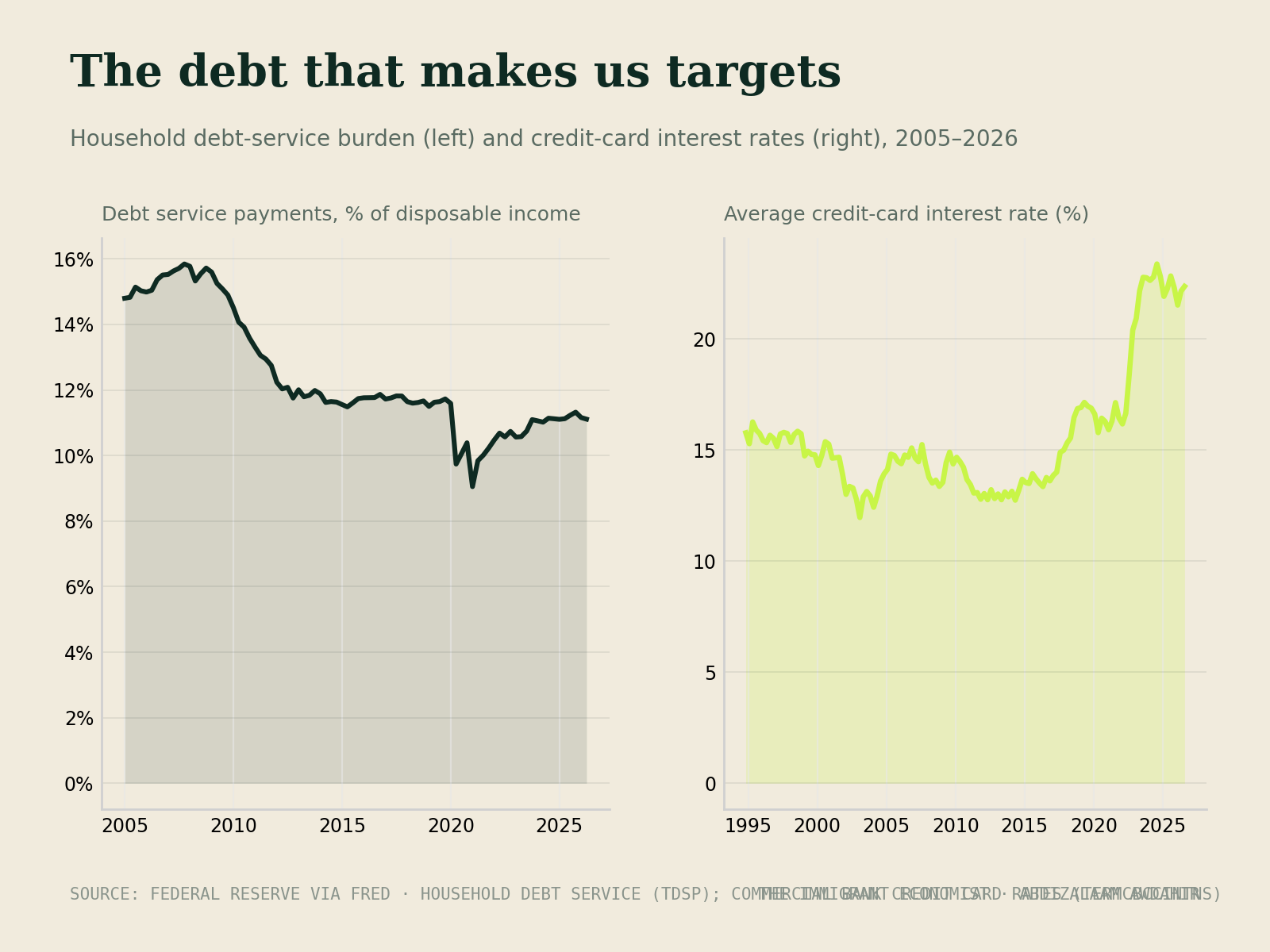
The storefront looks friendly: fast cash, no credit check, money today. Here is how it actually works. You borrow a few hundred dollars until payday and pay a fee that sounds small — say fifteen dollars per hundred borrowed for two weeks. Small, right? Annualized, that fee is an interest rate of several hundred percent. Compare: a credit card — itself expensive debt — charges around twenty percent a year. The payday loan is ten to twenty times worse. And the design is deliberate: the loan is due in full in two weeks, which almost nobody in genuine need can do, so you roll it over, pay another fee, and roll it again. The industry's profit comes almost entirely from repeat borrowers trapped in the cycle.
The escape routes: if you are employed, ask your employer about an advance — many will help quietly. Credit unions often offer small emergency loans at civilized rates. In Canada and the US, nonprofit credit counseling agencies exist and their first consultations are typically free. And the long-term fix is the emergency fund — even five hundred dollars of cushion breaks the payday lender's business model, because their entire customer is the person with zero slack. This is one more reason the emergency fund is the foundation of everything I teach.
The MLM mirage
You know the pitch, because it usually comes from someone you know: be your own boss, work from your phone, financial freedom, our sister from back home made ten thousand last month. Multi-level marketing companies sell products — supplements, cosmetics, oils — but the real product is the recruitment of sellers. The mathematics are brutal and public: the companies' own income disclosure statements show that the overwhelming majority of participants earn little or nothing, and many lose money on starter kits, inventory, and fees. The tiny percentage who earn real money sit at the top of a structure that requires everyone beneath them to fail.
Why does it spread through our communities like fire? Because it is marketed through trust, in our languages, at our gatherings, to people who are hungry for opportunity and flexible work. The recruiter is often your cousin, your neighbor, your sister's friend — a good person who is themselves losing money and hoping to recover it through you. The questions that protect you: Do the earnings come mostly from selling products to real outside customers, or from recruiting? What does the company's own legally required income disclosure say the average participant earns? Can I leave without losing money I paid in? If the answers are recruitment, almost nothing, and no — walk away with love, and warn the next person. The painful duty in our communities is to be the one who breaks the chain.
Credit repair, forex mentors, and other fantasies
'Credit repair' companies promise to erase bad credit for a fee. The truth: nobody can legally remove accurate negative information from your credit report — not them, not anyone. What they do for hundreds of dollars, you can do free: dispute genuine errors yourself with the credit bureaus, pay down balances, and wait for time to heal the record. Anyone selling deletion of accurate history is selling fiction.
Then there are the forex and crypto mentors — the young man on Instagram with the luxury car showing charts and promising to teach you to trade for a five-hundred-dollar course, or to trade for you. Understand the economics: foreign exchange and day trading are among the hardest games on earth, where the vast majority of retail participants lose money to professionals with faster machines and deeper pockets. Anyone who could reliably beat those markets would never need to sell courses to strangers. The car is rented; the screenshots are curated; the course is the business. This is also the place to say clearly: real investing — the boring, automatic, index-fund kind I teach here — is the opposite of all this. It requires no mentor, no signals group, no urgency. If an opportunity demands that you decide today, the answer is no. Legitimate money is patient.
Immigration fraud and official impersonators
The cruelest traps exploit the thing that matters most: your status. Fake consultants charge thousands for forms you could file yourself or for guarantees no one can give — nobody can guarantee a visa, and anyone who does is lying. Government impersonation scams call or text claiming to be from immigration, the tax agency, or the police, demanding immediate payment by gift cards, wire transfer, or crypto to avoid arrest or deportation. Know this as absolute law: no government agency in the US or Canada demands payment by gift card or cryptocurrency, ever, and no real officer threatens arrest by phone to extract money. Hang up. Call the agency back through its official published number. Report the attempt.
For real immigration help, use licensed professionals — in the US, licensed attorneys or accredited representatives; in Canada, regulated immigration consultants or lawyers — and verify the license on the official regulator's public register before paying anyone. Keep your own copies of every document and every filing. Your papers are your foundation; never let them exist only in someone else's hands.
The five rules that make you unhuntable
After all the specific traps, the defenses compress into five rules that stop nearly everything. One: urgency is the tell — any offer that must be decided now is designed to bypass your judgment; sleep on everything. Two: verify independently — check licenses on official registers, look up the company's income disclosures and complaints, call agencies back on numbers you find yourself. Three: if you cannot explain how the money is made, the money is made from you. Four: trust, but verify — community trust is precious, which is exactly why predators wear it as a costume; a recommendation from one of us is the beginning of research, not the end. Five: talk about it — predators depend on silence and shame, so make scam stories normal dinner-table conversation in your family and community.
I will end where I began. Our communities are targeted because we are ambitious, trusting, and in a hurry — three virtues aimed at the wrong door. The defense is not suspicion of everyone; it is a small set of habits applied every time. You have crossed borders and rebuilt a life from nothing. Compared to that, seeing through a man with a rented Lamborghini is easy. Guard what you are building. It is worth guarding.
Enjoyed this? It's also on