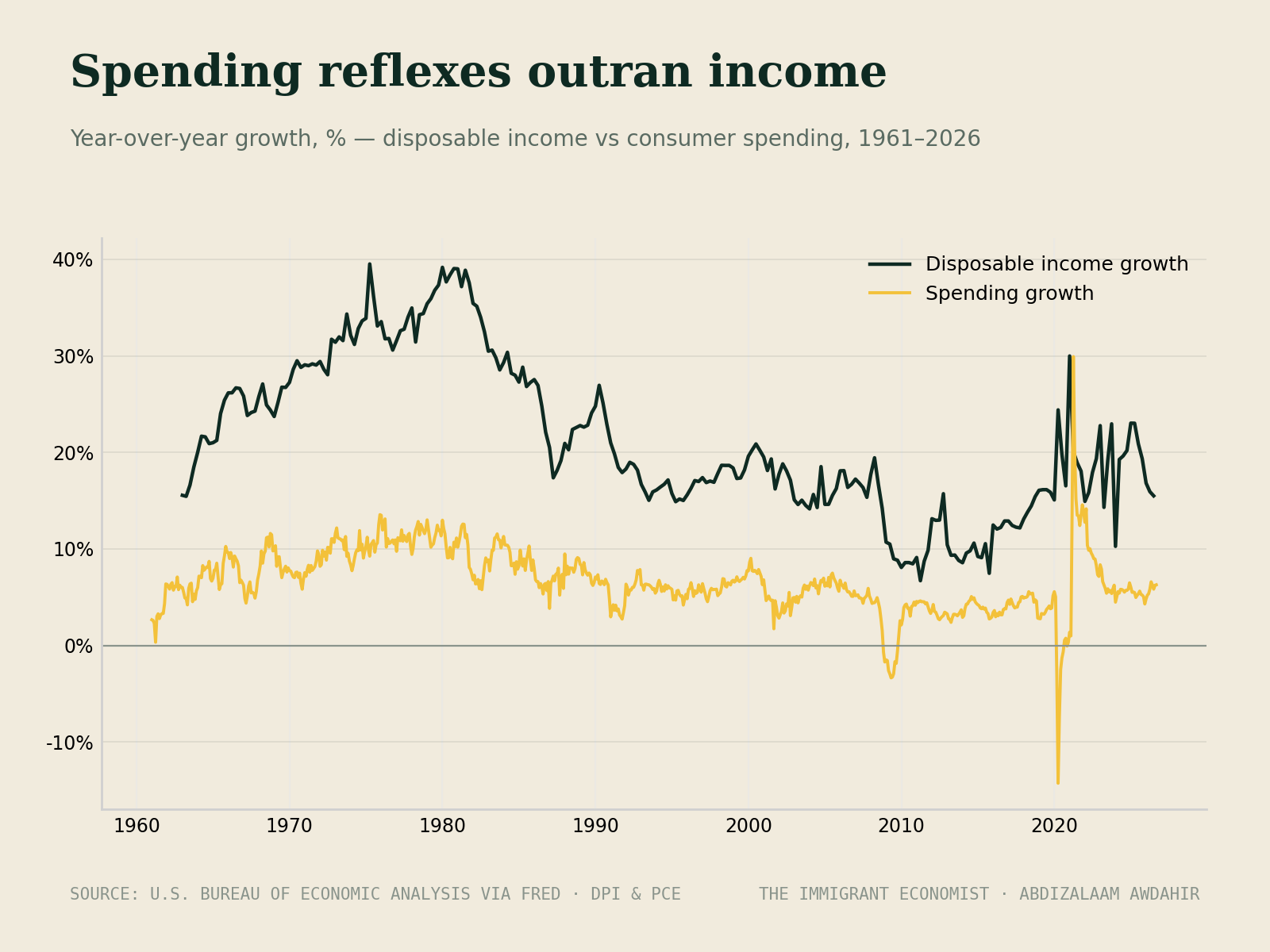
Every January, millions of people resolve to spend less, and by March most of them are back to baseline. The usual explanation is weak willpower. The better explanation is that willpower was never the right tool. Spending is an environmental behavior: it responds to cues, defaults, and friction far more reliably than to resolve.
Friction is the real lever
Consider how much engineering goes into making spending effortless. One-click checkout. Saved cards. Push notifications engineered to create urgency. “Only 3 left.” Your spending environment has been professionally optimized — by very smart people — against your intentions. Fighting that with raw discipline is bringing a knife to a gunfight.
So fight with friction instead. Delete saved cards from your browser. Unsubscribe from retail newsletters — all of them, in one ruthless sitting. Institute a 48-hour rule for anything over a set amount: add it to a list, and if you still want it in two days, buy it without guilt. Most wants evaporate; the ones that survive are usually worth it.
Replace, don't just remove
Pure restriction backfires the way crash diets do. The sustainable version of spending less is spending deliberately: cut hard on what you don't care about so you can spend freely on what you love. The person who adores travel and is indifferent to cars should drive something boring and fly well. Money is a tool for building a life, not a score to maximize.
Track one metric that captures this: your savings rate, reviewed monthly. Not whether each individual purchase was “good” — that way lies madness — but whether the overall flow points toward the life you actually want. Behavior follows measurement, and measurement is easier than virtue.
Enjoyed this? It's also on