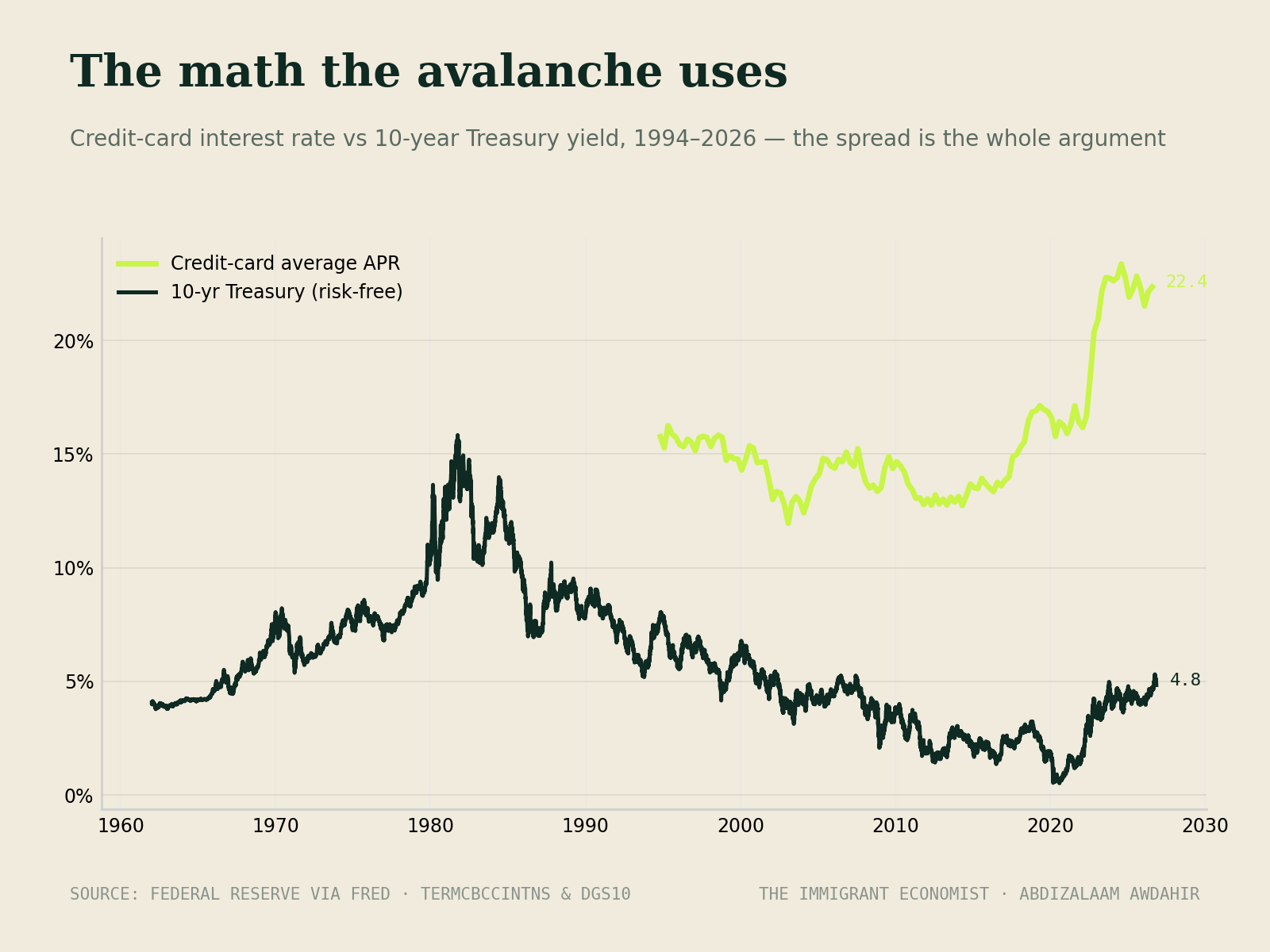
If you carry multiple debts — a credit card, a car loan, maybe a store card from a moment of weakness — you've probably heard two competing strategies. The avalanche says: attack the highest interest rate first. The snowball says: attack the smallest balance first. Personal finance people argue about this like it matters enormously. It matters less than you think, and more than you'd expect.
The math, honestly
The avalanche wins on paper. Paying off a 24% credit card before a 6% car loan saves real money — sometimes hundreds or thousands over the life of the debts, depending on your balances. If you ran your finances like a spreadsheet, this would be the end of the discussion.
But you are not a spreadsheet. Research on debt repayment consistently finds that people who close small accounts early are more likely to eliminate their debt entirely. Every account you close is a visible win, and visible wins are fuel. The snowball costs more in interest and works more often in practice.
How to choose
Ask yourself one question: when a project gets hard and results are invisible, do you push through, or do you drift? If you push through, take the avalanche and keep the savings. If you drift — and most of us drift — take the snowball and don't apologize for it. The best method is the one still running in month nine.
Whichever you pick, the mechanics are identical: minimum payments on everything, every spare dollar aimed at one target, and a small celebration each time a balance hits zero. Then roll that freed-up payment into the next target. That's the part both methods agree on — momentum is the whole game.
Enjoyed this? It's also on