Over the past three essays I've written about three books that shaped how I think about money: Morgan Housel's The Psychology of Money, Liz Thames's Meet the Frugalwoods, and David Chilton's The Wealthy Barber. People often ask which one they should read. My honest answer is that the question misses the point — these books aren't competitors. They're three parts of one machine.
This matters especially if you arrived in America, Canada, or another Western country from a poorer one. The money instincts you developed back home were not wrong — they were rational responses to high inflation, unstable banks, and currencies that could evaporate. But instincts that kept you safe there can quietly keep you poor here. Rebuilding those instincts requires three different repairs, and each book handles one.
Three engines, one machine
In my reading notes I call them the three engines. The Psychology of Money is the behavioral engine: it repairs how you perceive risk, so that a falling market reads as a fee for future returns rather than a fire alarm. Meet the Frugalwoods is the operational engine: it maximizes the gap between what you earn and what you spend, because in your early years your savings rate — not your investment genius — is the primary engine of capital. The Wealthy Barber is the structural engine: it installs the automatic plumbing — pre-authorized contributions, tax-sheltered accounts, dollar-cost averaging — that keeps wealth building even when your motivation takes a month off.
Mind, gap, system. Behavior tells you why to invest, frugality gives you something to invest, and automation makes sure it actually happens. Remove any one engine and the machine stalls: mindset without savings is theory, savings without automation leaks, and automation without mindset gets switched off at the first market crash.
The weekly habit: twenty minutes on Sunday
Once a week — I do it Sunday evening — sit down with your banking app for twenty minutes. Two questions only. First: did my spending this week roughly match my plan? Second: what needs adjusting next week? No guilt, no forensic accounting, no spreadsheets with nineteen tabs.
While you're there, ask the Frugalwoods question about your two or three biggest purchases: did this buy me freedom, or did it cost me freedom? You won't always like the answer, and that's fine. The goal isn't a perfect record — it's keeping the gap between income and spending visible. What gets seen gets managed.
The monthly habit: know your savings rate
On the first weekend of each month, calculate one number: what percentage of your take-home pay did you keep? Not what you intended to keep — what you actually kept. Write it down somewhere dumb and simple. A note on your phone works.
Then do one optimization. Just one. Cancel a subscription you forgot. Renegotiate your phone plan. Cook the meal you usually order. The Frugalwoods insight is that these cuts are tax-free raises — a dollar saved is worth more than a dollar earned, because the earned dollar gets taxed on the way in. Twelve small optimizations a year compound into a permanently wider gap.
The quarterly habit: turn the ratchet
Every three months, raise your automatic investment transfer — even by 1% of your income. This is the Wealthy Barber's ratchet: the transfer only moves in one direction. Because the money leaves before you see it, your lifestyle never expands to swallow the increase. Four small raises a year means your savings rate climbs almost painlessly while your life stays the same.
Use the same check-in to learn one piece of your new country's financial infrastructure. This quarter: how a TFSA or Roth IRA actually works. Next quarter: what your employer match is really worth. The quarter after: how your credit score is built. None of this is taught anywhere — it's tribal knowledge that locals absorb by osmosis, and newcomers have to hunt down deliberately.
The annual habit: the net worth letter
Once a year — I do it every December — write yourself a one-page letter. List your assets, list your debts, subtract, and write down your net worth. Then answer Housel's question: when the market dropped this year, did I panic, or did I treat it as the fee? And Thames's question: is my lifestyle inflation under control, or did the arrival effect catch me? And Chilton's question: did my automatic system run all twelve months without me touching it?
That letter, reread in future years, becomes the most motivating document you own. Watching the number climb from negative to zero to five figures to six is proof — in your own handwriting — that the machine works.
The traps that are specific to us
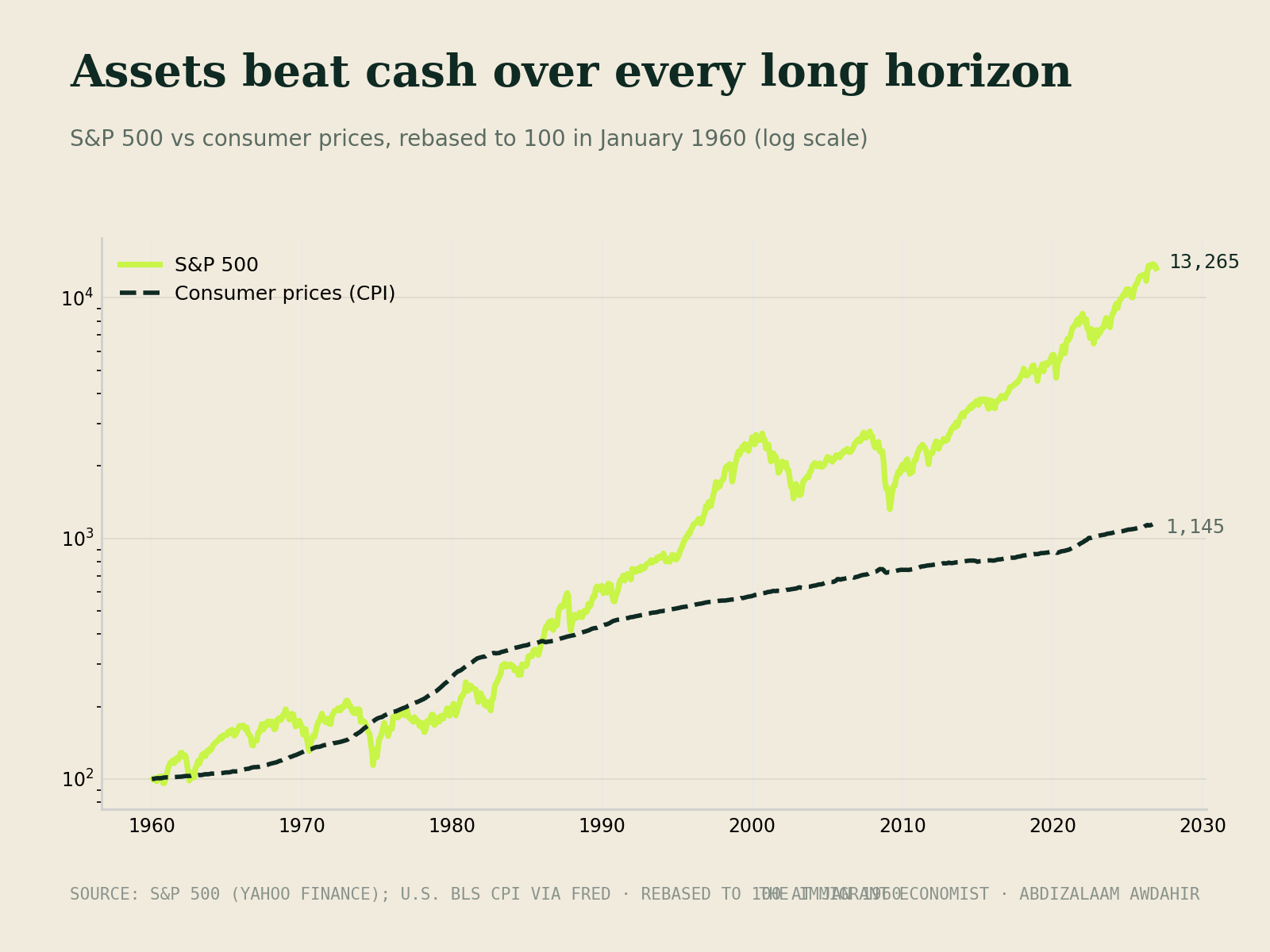
A few traps hit newcomers harder than anyone else, and the routine should name them. Cash hoarding: keeping everything in a checking account feels safe if you grew up watching banks fail, but in a stable economy inflation is the quiet thief — your emergency fund belongs in a riba-free account (an Islamic bank's profit-sharing savings pays you without interest), and everything beyond it belongs in halal investments. The arrival effect: your first Western paycheck feels enormous, and lifestyle inflation can consume the entire critical first five years — the window when your savings rate matters most. Family obligations: remittances are real and honorable, so don't pretend they don't exist — give them a fixed line in your budget, a number you choose in advance, so generosity doesn't silently eat the engine.
And a warning: our communities are specifically targeted by get-rich-quick schemes, forex 'mentors,' and crypto promises, precisely because scammers know we're hungry and the system is unfamiliar. The routine above is slower. It is also the one that actually works — every genuinely wealthy immigrant family I know built it this way, never the other way.
What's next
This three-engine framework is the skeleton of the book I'm writing now — a complete, step-by-step system for newcomers building wealth in the West, from your first paycheck to your first six figures. It expands each habit here into full chapters, with the worksheets and account-by-account walkthroughs I wish someone had handed me. Join the newsletter and you'll be the first to know when it launches — and until then, these four essays are the bedrock. Start anywhere, but start.
Enjoyed this? It's also on