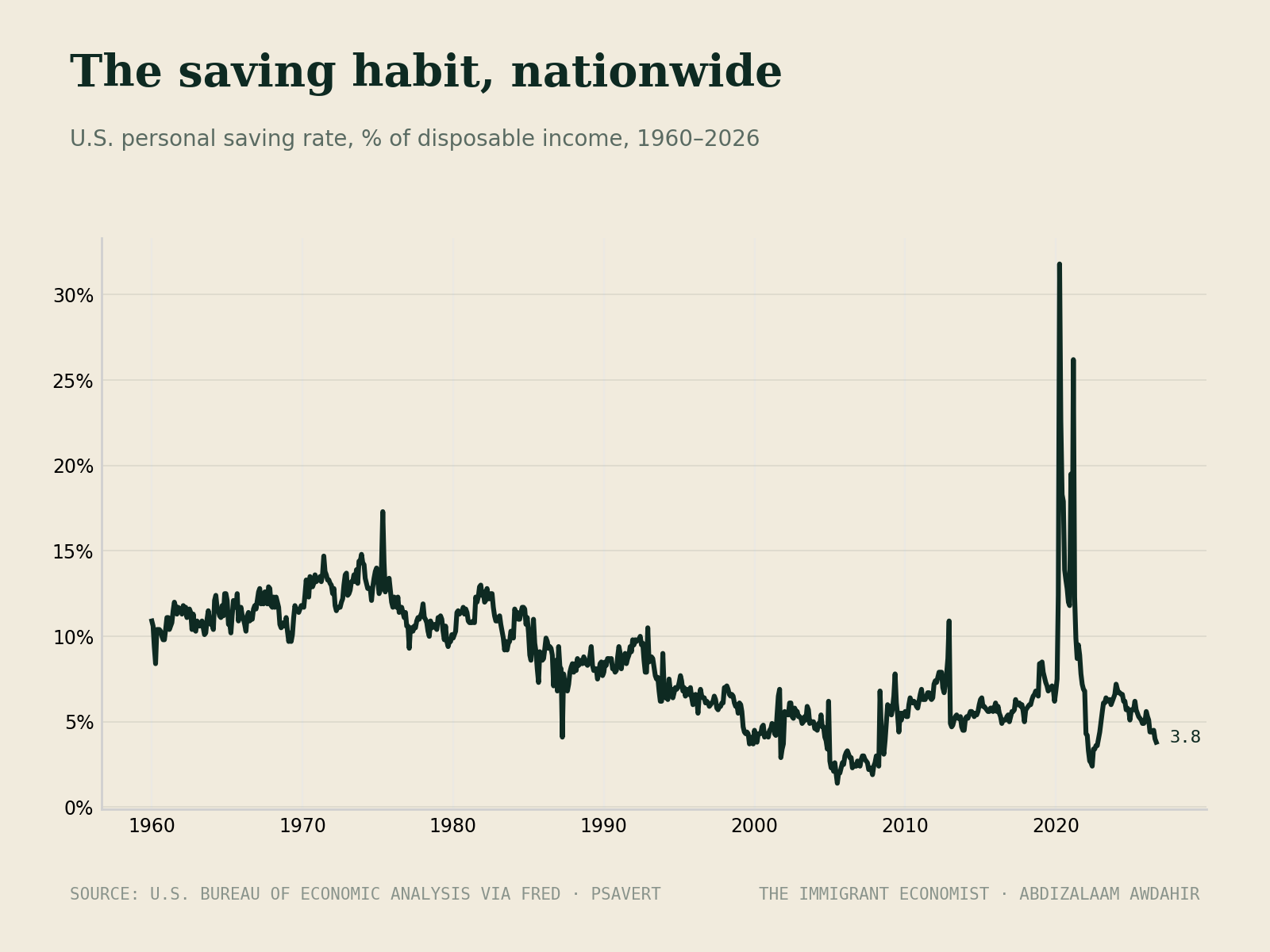
Somewhere in your first months in a new country, a coworker mentions their 401(k) or their TFSA, and you nod like you understand. Inside, two feelings at once: embarrassment — everyone here seems to know something you don't — and suspicion — because where you come from, the stock market is where connected people profit and ordinary people get burned. This essay is for both feelings. By the end you will know exactly what these accounts are, why the fear is understandable but costly, and the precise order of steps that turns a paycheck into ownership.
First, a distinction that, once it clicks, rearranges everything else: an account is not an investment. A TFSA, RRSP, 401(k), or IRA is a container — a legal wrapper with tax rules. What you put inside the container — cash, or index funds that own hundreds of real companies — is the investment. The most common mistake newcomers make is opening the account, leaving cash inside it, and believing they are 'investing.' Cash in the container is a parked car with the engine off. Let's fill the tank properly.
Why we fear the market — and what the fear costs
The immigrant's fear of the stock market is not ignorance; it is experience. Many of us watched banks collapse, currencies die, and connected insiders win while ordinary savers lost everything. In that world, avoiding the market was the smart move. But carry that instinct into a stable, regulated market and it quietly becomes the most expensive decision of your life. Here is the arithmetic: a broad stock market index in North America has historically returned, on average, around seven to ten percent a year over long periods — with crashes and recoveries along the way. Cash in a checking account returns almost nothing and loses purchasing power to inflation every year. Over thirty years, the difference between the two is not small. It is the difference between retiring and not.
The fear also confuses two different things. Buying one company's stock because a friend tipped you — that really is close to gambling. Buying a low-cost index fund that owns hundreds of companies across the whole economy — that is ownership of the productive capacity of the country itself. Individual companies do fail; the whole market has always recovered, because it is made of businesses adapting, hiring, and earning. When you buy the index, you are not betting on a horse. You are buying the racetrack. I have written a whole essay on this — the Investing 101 piece built on Benjamin Graham and Ben Felix — and the conclusion stands: boring, diversified, automatic beats clever, concentrated, and scared.
The Canadian containers: TFSA and RRSP
Canada gives you two containers, and they work in opposite directions. The TFSA — Tax-Free Savings Account — takes money you have already paid tax on; everything it earns inside grows tax-free and comes out tax-free, forever. Contribution room accumulates every year from the year you turn eighteen and are a resident, and if you withdraw, the room comes back. For most lower and middle incomes, the TFSA is the best first container in the country — flexible, simple, and the government never touches the growth.
The RRSP works the other way: you get a tax deduction now — contributing lowers this year's taxable income, often producing a refund — the money grows tax-sheltered, and you pay tax when you withdraw in retirement, ideally at a lower rate than you pay today. The RRSP shines when your income is high now and will be lower later; the TFSA shines when your income is modest now. Contribution limits for both change by year, so check the Canada Revenue Agency's official pages for your exact room — your CRA account shows it precisely. One warning that saves people pain: over-contributing is penalized, so verify your room before depositing, especially in your first years.
The American containers: 401(k) and IRA
In the US the system runs through your employer first. The 401(k) takes contributions straight from your paycheck — traditional contributions lower your taxable income now and are taxed at withdrawal; Roth contributions are taxed now and come out tax-free. And then there is the single best deal in American personal finance: the employer match. Many employers match your contributions up to a percentage of your salary. That match is an instant, guaranteed one-hundred-percent return on the matched money. No investment on earth reliably offers that. Not contributing enough to get the full match is turning down part of your salary — I say it that bluntly because it is that simple.
If you have no 401(k) at work, or you have matched it fully and want more, the IRA is the individual version — you open it yourself at a brokerage, with the same traditional-or-Roth choice. Limits and rules adjust over time, so confirm current numbers with the IRS or your brokerage. One newcomer-specific note: contributions require earned income and there are residency and visa nuances for some account features — a single session with a tax professional in your first year pays for itself many times over.
The sequence — what to do, in order
Now the part I'd ask you to read twice. Step one: the starter emergency fund — even one month of expenses in a riba-free Islamic savings account — because investing without a cushion means the first car repair forces you to sell investments or reach for a credit card. Step two: the employer match, if you have one — contribute exactly enough to capture all of it; this is free money and nothing outranks it. Step three: kill high-interest debt, because a guaranteed twenty-plus-percent cost beats any expected market return. Step four: fill the tax-sheltered containers — TFSA or Roth-style space first for most modest incomes, traditional space when your income and tax rate are higher — with automatic monthly contributions into a low-cost, broadly diversified halal index fund — funds like SPUS or HLAL screen out companies whose business or debt levels conflict with Islamic principles, so your growth stays clean. Step five: automate and ignore — contributions run on payday, you review once a year, and you never sell because a headline scared you.
Notice what is not on the list: stock tips, timing the market, waiting for the crash, watching the news. The investor's enemy was never the market. It is the person in the mirror reacting to the market. Your plan is written down in calm times precisely so the frightened version of you has instructions to follow.
The identity shift
I will close with the part that is not in any account agreement. Something changes inside a person the first year the statements show their money earning money — not much at first, a few hundred dollars, but earned while they slept, while they worked, while they lived. That is the moment an employee starts becoming an investor. And for an immigrant it carries extra weight: back home, systems extracted from our families; here, for the first time, a system is compounding for you. That is not a small thing. That is one of the reasons we crossed.
Open the container this week. Put the index fund inside it. Automate the contribution. Then go live your life — the account will be working every hour of it.
Enjoyed this? It's also on